

Carbon Fibre
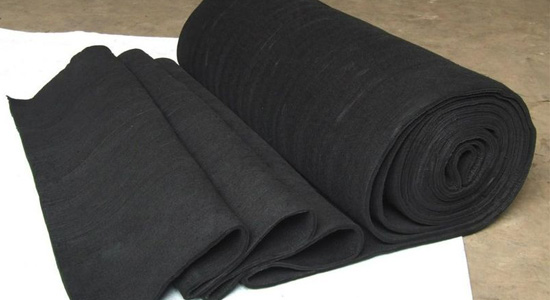
Carbon fiber is a material consisting of extremely thin fibers about 0.005–0.010 mm in diameter and composed mostly of carbon atoms. The carbon atoms are bonded together in microscopic crystals that are more or less aligned parallel to the long axis of the fiber. The crystal alignment makes the fiber very strong for its size. Several thousand carbon fibers are twisted together to form a yarn, which may be used by itself or woven into a fabric.
The properties of carbon fibers such as high flexibility, high tensile strength, low weight, high temperature tolerance and low thermal expansion make them very popular in aerospace, civil engineering, military, and motorsports, along with other competition sports.
Carbon fibers are usually combined with other materials to form a composite. When combined with a plastic resin and wound or molded it forms carbon fiber reinforced plastic (often referred to also as carbon fiber) which is a very high strength-to-weight, extremely rigid, although somewhat brittle material. However, carbon fibers are also composed with other materials, such as with graphite to form carbon-carbon composites which have a very high heat tolerance.
Properties :
The main properties of the carbon fibre which makes it a versatile product are :
- » Smaller and lighter specific gravity than steel
- » High Modulas and high rigidity
- » High strength
- » Good thermal conductivity
- » High Chemicals resistivity
- » Non corrosive
Applications :
- » Aerospace : aircraft, satellite, rocket, C/C disk brake, primary and secondary structure, etc.
- » Industry and Transportation : vehicle, yacht, constructive reinforcemnet, CNG tank, roller, blade of wind mill, LCD cassette, medical bed, etc.
- » Sports Goods: tennis and badminton rackets, fishing rod, bicycle, etc.
Activated Carbon
- Activated Carbon
- Activated Carbon Granular
- Carbon Cylindrical Pellets
- Activated Carbon Fibre
- Carbon Fibre